How to choose
- Read the descale chapter of your manual first. Look up your exact Breville model before you look at bottles. If the manual names a type of descaler or an acid to avoid, that settles part of the choice for you.
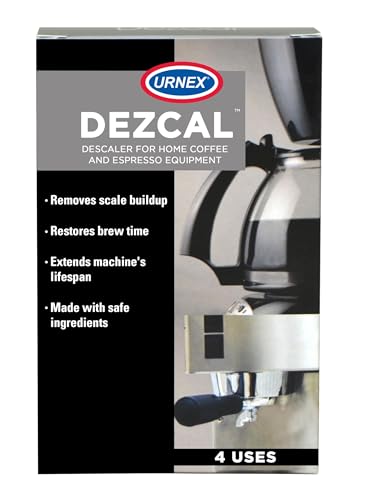
- Match the pack to your water. On hard water you descale more often, so the number of uses per pack matters. A two-use bottle is fine in a soft-water flat; a four- or eight-use pack makes more sense in a hard-water kitchen.
- Keep descaling and cleaning apart. Run the descale and the cleaning cycle as separate jobs, one product each, and rinse the way the pack and the manual describe. Never mix two treatments to save time.
Which descaler does a Breville espresso machine need?
One your manual is happy with, mixed at the dose on the pack. Breville gets you started: the US instruction book of the Bambino lists descaling powder in the box, and the Bambino Plus book lists descaling powder among its supplies. Once that first pack is used up, you need a refill that dissolves scale and does nothing else.
We found eight descalers with a buyer review record whose own listing names Breville. All of them sell themselves as universal, for most machine brands; the Tillbrook Descaler for Breville, 16 oz is the one whose title leads with Breville, at 8.5/10. Where a listing names its acid, it's lactic acid (De'Longhi EcoDecalk Universal Descaler) or citric acid (ACTIVE Descaling Solution, 32 oz and Essential Values Universal Descaler). The other five don't say, which is worth a question to the seller if your manual names an acid to avoid.
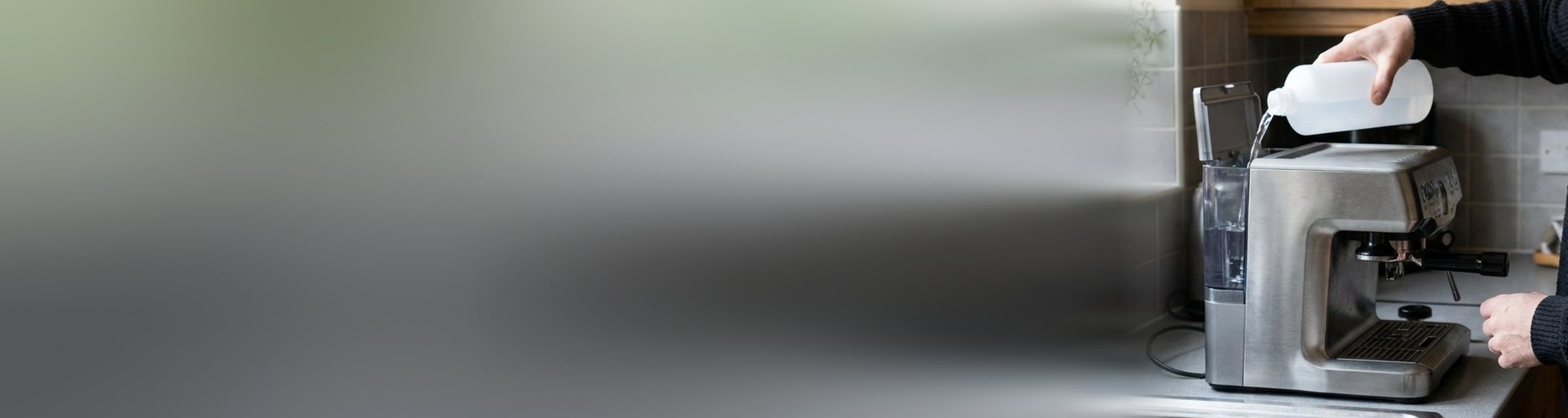
How to descale a Breville espresso machine
Let the machine tell you when. Breville's instruction books flag the job on the machine itself, and the models don't all do it the same way:
- Bambino: the 2 Cup button flashes continuously when the combined clean and descale cycle is due. Breville warns against ignoring it, because hard water scale can cut flow, temperature and taste.
- Bambino Plus: after 200 extractions it asks for a cleaning cycle with the cleaning disc and a cleaning tablet, which the manual keeps separate from descaling, and it flags the descale on its own.
- Dual Boiler: the manual has you set your water hardness, and it asks you to let the machine cool for at least an hour before you descale.
From there, follow the descale chapter of your own manual step by step and mix the descaler exactly as its pack says. Each of these listings prints its own dose and rinse routine; where the pack and the manual disagree, the manual wins. Own a Barista Express, a Barista Pro or an Oracle? Same rule. None of the descaler listings here names a single Breville model, only the brand, so your manual is the real compatibility check. Our guide to cleaning an espresso machine puts the descale next to the daily jobs, and the Bambino vs Bambino Plus guide has the detail for those two.
What one descale costs
A bottle price tells you little until you divide it by the number of descales in the pack. Here is that sum for every eligible descaler that states its uses, at the prices we recorded on Nov 17, 2026 (they may have changed since):
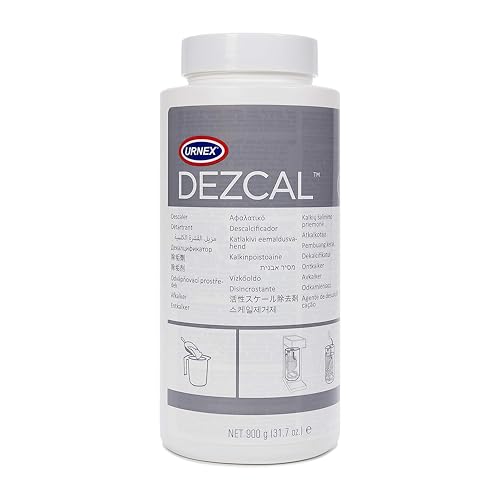
The De'Longhi EcoDecalk Universal Descaler and the Urnex Dezcal Descaler, 900 g don't state a number of uses, so they aren't in the table. Honestly, a dollar either way matters less than picking a descaler your manual accepts. On hard water, though, where you descale more often, the cheaper pack adds up over a year.
At the prices we recorded on Nov 17, 2026, our top five run from $9.98 (Urnex Descaling Powder, 4 Uses) to $29.98 (Urnex Dezcal Descaler, 900 g). Prices move often, so the button on each card shows today's.
Descaler or cleaning tablets?
Different jobs, and a Breville usually needs both. A descaler dissolves mineral scale inside the heating system and the pipes. Cleaning tablets strip old coffee oil from the group head and the shower screen during the cleaning cycle; Breville sells its own, the Breville BEC250 Cleaning Tablets (8), rated 9.1/10. Running one in place of the other leaves half the work undone.
That's also why the ACTIVE Espresso Cleaning Tablets (120) is missing here: its listing mentions descaling and Breville, but it is sold as backflush cleaning tablets. The tablets, powders and brushes have their own espresso machine cleaning products ranking.
Your water decides how often
Hard water scales a machine faster than soft water, so two kitchens with the same Breville can need very different rhythms. Start with what your manual says about water: the Bambino's US book asks for cold tap water and advises against highly filtered, demineralised or distilled water for that model. Then check how hard your tap water is, and let the machine's own reminder set the pace. Our water and scale guide walks through it without inventing a calendar.